
Your apartment door
If the problem is at your unit door, describe what changed. Perhaps you have moved in, a key is missing or the latch catches only when you pull the door firmly. Those are different problems, and replacing everything is not always the right first step.
Tenants should check the lease and speak with the landlord or manager before changing hardware or key access. A lock may be part of a building key system even when it looks like a regular household deadbolt.
The entrance everyone uses
A shared entrance needs a building-level decision. Other residents, maintenance staff and authorized keyholders may all rely on it. Changing its cylinder or installing a keypad without permission can leave other people unable to get in.
Around Davis and Union squares, it is useful to specify the exterior entrance, interior vestibule or individual unit. At a managed property in Assembly Square, contact the building team about access and approved work first. Do not prop a security or fire door open to work around a fault.
Before you call
- Confirm who can approve the work
- List the doors and existing keys
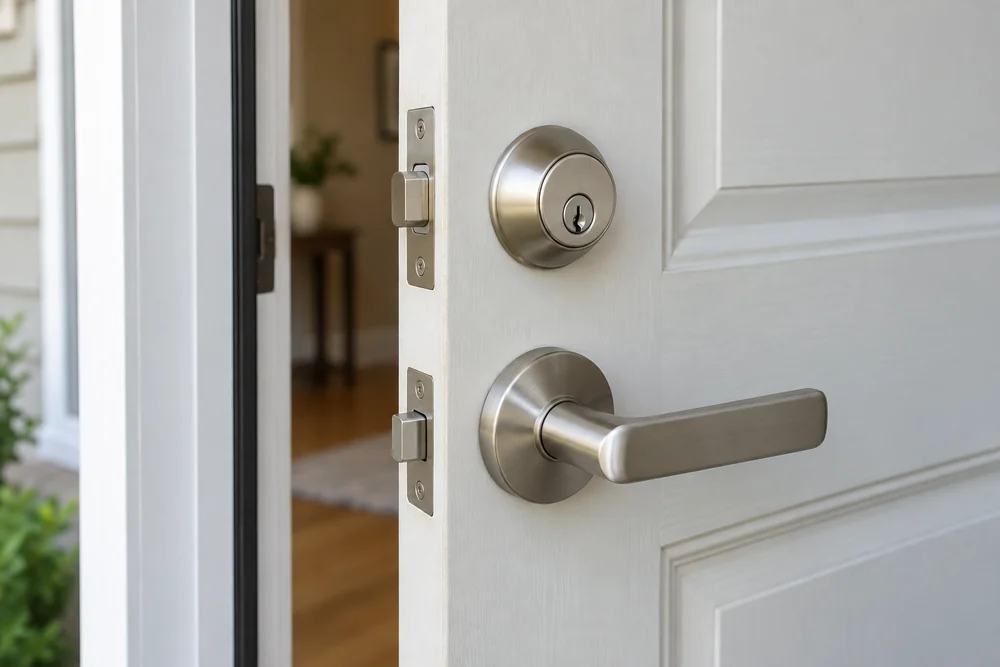
- Photograph both sides and the door edge if accessible
Moving in? Start with key control.
Count the doors you want to discuss and separate your own locks from any shared doors. Rekeying changes which key works in compatible existing hardware; replacement changes the hardware itself. A worn or damaged lock may need repair or replacement instead.
If the lock behaves differently with the door open and closed, mention that too. Door fit and latch alignment can affect operation. Explain the symptom before choosing a new lock, and request an estimate that separates the visit, labor and parts.
A useful question
Can the same key work at my front and back doors?
Sometimes, if the cylinders are compatible and the doors are yours to change. Existing hardware, key systems and shared-entry arrangements must be checked before promising one-key operation.