
Your unit and the shared entrance are separate decisions.
In Malden Center or Maplewood, an address may include a private unit door and an entrance used by other residents. Identify the actual lock that needs attention. A landlord or building manager may need to approve changes to either door.
If you have moved in, ask who controls the existing key system before arranging rekeying. The aim may be to change access to your unit while keeping shared-building access working as intended.
When a door becomes difficult to use
Tell us whether the problem occurs with the door open as well as closed. A lock that operates freely while open but sticks when shut may need an assessment of door fit along with the hardware.
For a storefront, describe the opening or closing routine and the authorized keyholder. A missing staff key and a latch that will not engage need different work. Explain both if they are happening together.
Before you call
- Private unit or shared door
- Permission and existing key-system details
- Open-door versus closed-door symptoms
Prepare a clear request.
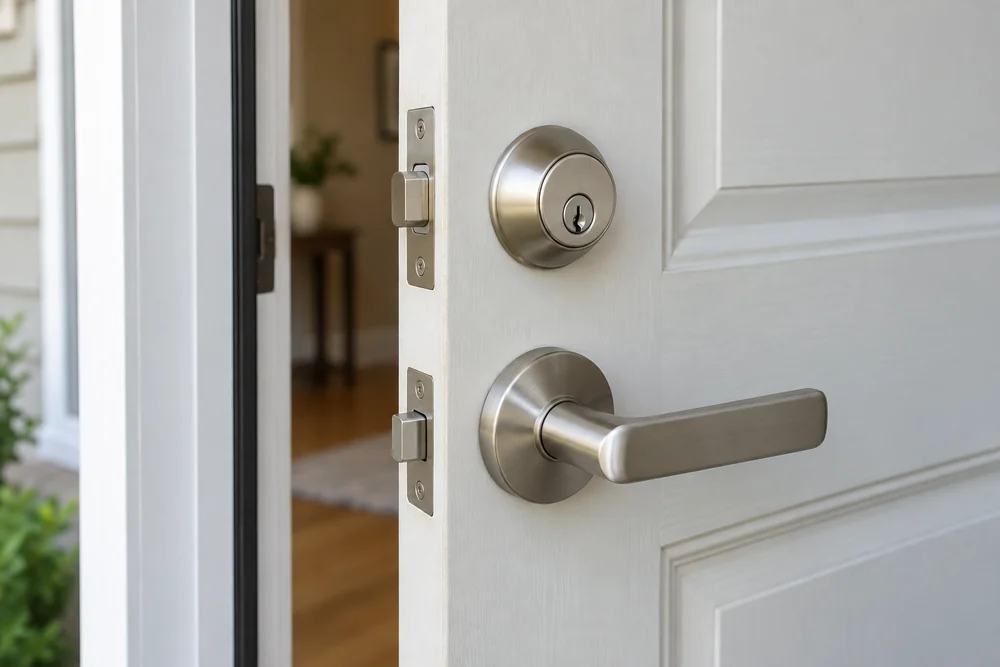
Have the street address, unit and entrance instructions ready. If you can access the door safely, photos of the two faces and edge can help with the initial discussion. There is no need to know the technical name of the lock.
Call to check current availability and ask how the estimate separates the visit, labor and parts. Confirm the number of doors and keys included, and agree on additional work only after its purpose and cost have been explained.
A useful question
Does a new tenant need to replace every lock?
Not automatically. Check permission and the property’s key arrangements first. Rekeying suitable hardware may change access without replacing it, while worn or damaged parts may need a different solution.