
Keep the lock. Change the key access.
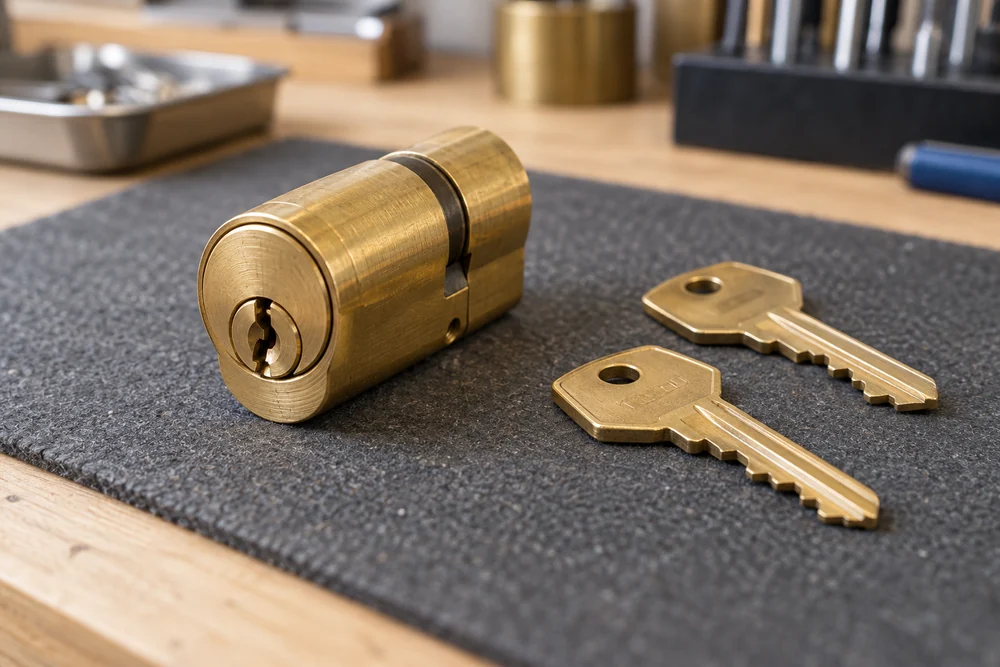
Rekeying changes the internal keying of a suitable cylinder so a different key operates it. The outside handle or deadbolt can often remain. It is a practical question to raise after a move, a missing key or a change in authorized keyholders.
It is not a cure for every hardware problem. A loose handle, damaged cylinder or door that is out of alignment may need a separate repair. Tell us both why you want new keys and whether anything is difficult to operate.
Which doors are yours to change?
In a Somerville apartment, separate the unit lock from shared entry doors. Get the necessary permission from the landlord or building manager. A shared or master-keyed lock may need to remain compatible with the property system.
At a house or business, list the doors and note which existing keys work in each. If you want one key for several locks, compatibility has to be checked. Similar-looking locks are not necessarily designed to use the same key.
A little preparation helps avoid surprises.
Have your working keys available if you have them, but say clearly if all keys are missing. Photographs of both sides of the door and the visible hardware can help with an initial discussion. The cylinder and its condition still need to be assessed.
Before work begins, confirm which locks will be changed, how many new keys you need and the full estimate. Test each agreed door with the new key afterward. Ask directly about any lock that was outside the work scope rather than assuming one visit changed every key on the property.
Before you call
- Doors included in the change
- Permission for shared or managed hardware
- Number of new keys needed
A useful question
Is rekeying always cheaper than replacing a lock?
There is no universal price comparison. The condition and type of hardware, number of cylinders and required parts affect the estimate. Compare the options for your actual doors, including both labor and materials.