
| What you notice | What to describe |
|---|---|
| Works open, sticks closed | Whether the door needs lifting, pulling or pushing before the key turns. |
| The handle or cylinder moves | Which part feels loose and whether the door still locks. |
| The key no longer turns | Whether another known working key behaves the same way. |
Notice when the problem happens.
A useful first detail is whether the lock works with the door open but becomes difficult when it is closed. If it does, tell us. The fit between the door, latch and frame may need attention as well as the lock itself.
Other symptoms point to different questions: the key goes in but will not turn, the cylinder moves in the door, the handle feels loose or the latch stays retracted. Describe what you can observe without taking the hardware apart.
Do not turn a small problem into a broken key.
If using the key takes increasing force, stop forcing it. A damaged or broken key can add another problem. Do not pour household oil or use unfamiliar tools inside the cylinder. Explain what has already been tried when you call.
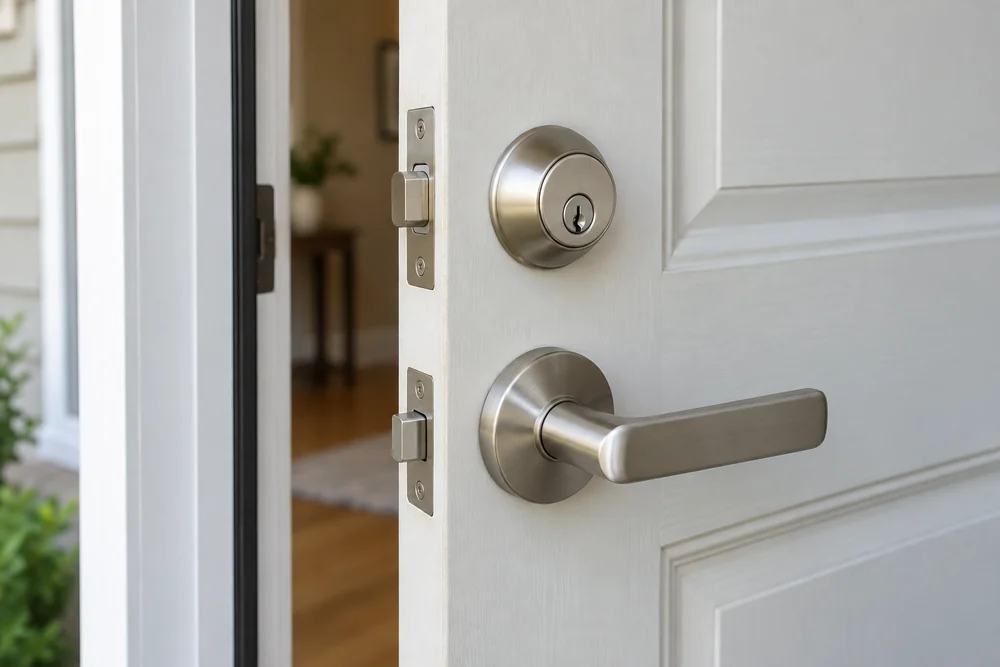
Older doors around Somerville can have several generations of hardware. A close photo of the lock and a wider photo of the door edge help distinguish a cylinder problem from a fit problem. A building manager should be involved when the entrance is shared.
Repair or replace after the problem is understood.
Some faults may be addressed by an adjustment or suitable replacement part. Other hardware may be too worn or damaged to keep using. Ask what caused the problem, which parts are included and whether the proposed work changes your existing keys.
An estimate given before inspection may depend on the condition found at the door. If additional work is recommended, have the change and cost explained before you agree. At the end, check the door through normal opening, closing, locking and unlocking.
Before you call
- Does it work differently with the door open?
- Which part moves, catches or feels loose?
- Is this a private door or a shared entrance?
A useful question
Do I need a new lock if the key only sticks when the door is closed?
Not automatically. Door fit or alignment may contribute to the problem, although the hardware can also be worn. Mention this specific symptom so both the lock and its relationship to the frame can be assessed.